


Noninvasive Breathing Sensor
This project was for the Digital Media Lab at the University of Bremen in Germany. The investigators were seeking to develop a biofeedback tool to support cancer patients recovering from radiotherapy. Their findings indicated that having patients self-regulate their breathing using real-time cues improved their recovery. Therefore they needed a solution to collect breathing data and then send it to a display, which then would provide visual cues to patients in real-time.
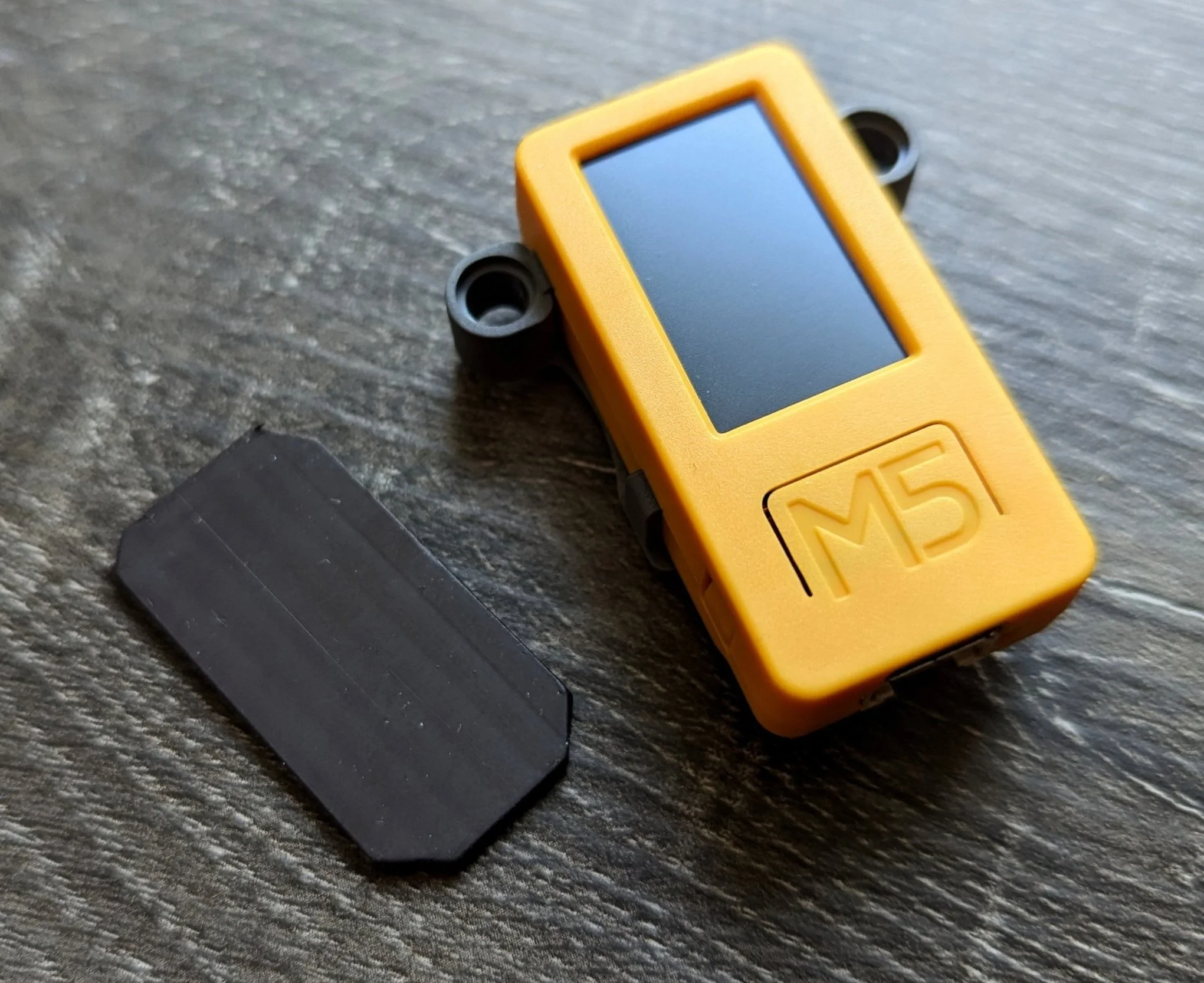
I developed a proof-of-concept based on a 3-axis accelerometer, magnetically secured to the patient’s clothing, resting over the patient’s clavicle. I used an off-the-shelf hardware platform: the M5StickCPlus2, which integrates an accelerometer and a WiFi-capable microcontroller (ESP32).
Through literature search and empirical testing, I determined the optimal placement site, attachment method, and signal of interest. Next, I isolated the breathing signal by developing a digital signal processing algorithm that incorporated a series of frequency-domain filters as well as signal downsampling, rescaling, and reconstruction stages. I then added WiFi transmission functionality to the algorithm to stream the processed data as UDP packets. Lastly, I wrote a host-side script that received the datastream and parsed it for the display system. Firmware was written in C/C++ while the host-side script was written in Python.